Lighting Color Rendering
Ways to Measure Color Rendering
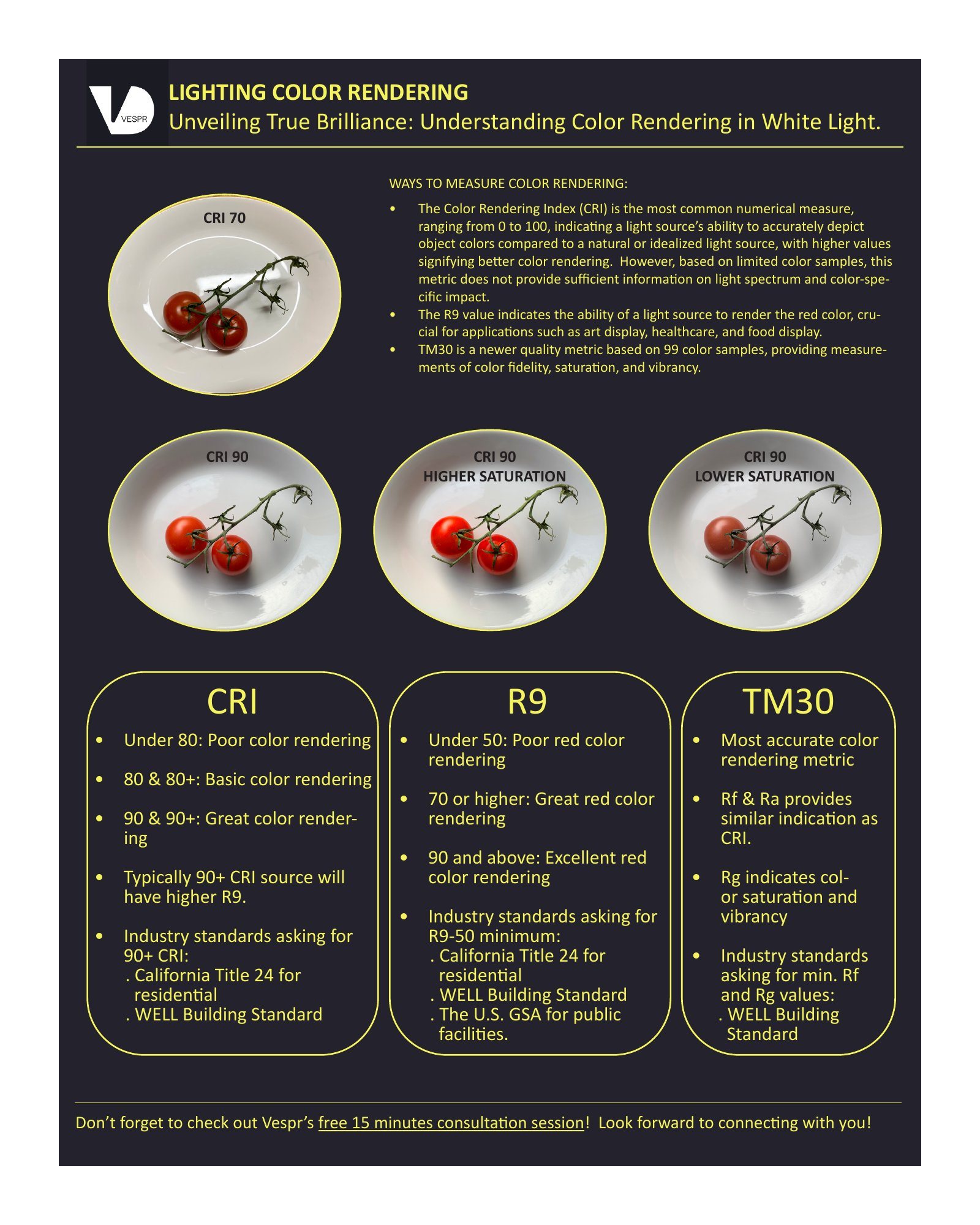
The Color Rendering Index (CRI) is the most common numerical measure, ranging from 0 to 100, indicating a light source’s ability to accurately depict object colors compared to a natural or idealized light source, with higher values signifying better color rendering. However, based on limited color samples, this metric does not provide sufficient information on light spectrum and color-specific impact.
The R9 value indicates the ability of a light source to render the red color, crucial for applications such as art display, healthcare, and food display.
TM30 is a newer quality metric based on 99 color samples, providing measurements of color fidelity, saturation, and vibrancy.
CRI
Under 80: Poor color rendering
80 and 80+: Basic color rendering
90 and 90+: Great color rendering
Typically a 90+ CRI source will have a higher R9.
Industry standards asking for 90+ CRI: California Title 24 for residential; WELL Building Standard.
R9
Under 50: Poor red color rendering
70 or higher: Great red color rendering
90 and above: Excellent red color rendering
Industry standards asking for R9 50 minimum: California Title 24 for residential; WELL Building Standard; the U.S. GSA for public facilities.
TM30
Most accurate color rendering metric
Rf and Ra provide a similar indication as CRI.
Rg indicates color saturation and vibrancy.
Industry standards asking for min. Rf and Rg values: WELL Building Standard.
See the original newsletter (1 page)