Benefit of Lighting Layers: Utilizing Layers of Light to Maximize User Experience
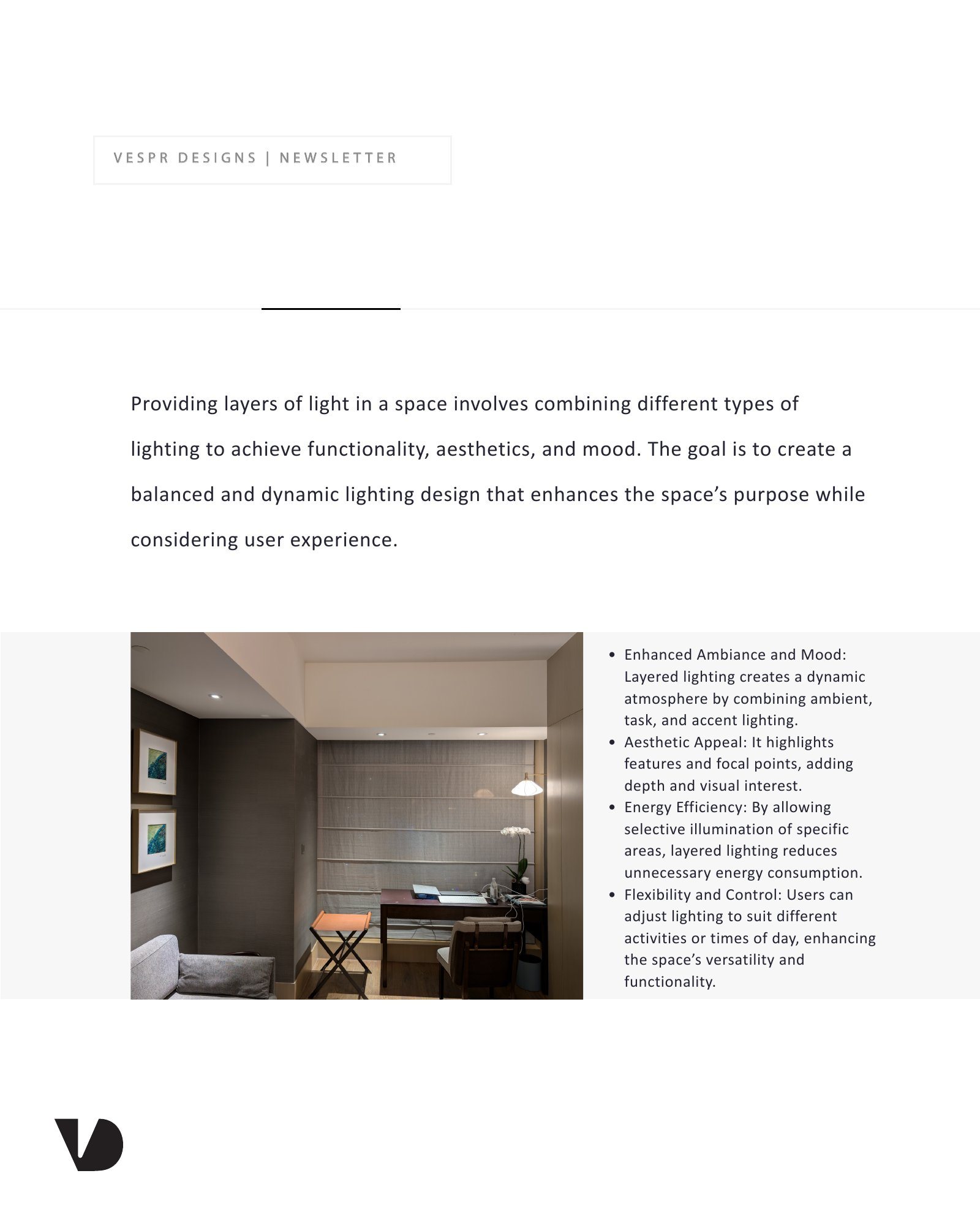
Providing layers of light in a space involves combining different types of lighting to achieve functionality, aesthetics, and mood. The goal is to create a balanced and dynamic lighting design that enhances the space’s purpose while considering user experience.
Benefits of Layered Lighting
Enhanced ambiance and mood: Layered lighting creates a dynamic atmosphere by combining ambient, task, and accent lighting.
Aesthetic appeal: It highlights features and focal points, adding depth and visual interest.
Energy efficiency: By allowing selective illumination of specific areas, layered lighting reduces unnecessary energy consumption.
Flexibility and control: Users can adjust lighting to suit different activities or times of day, enhancing the space’s versatility and functionality.
Types of Lighting Layers
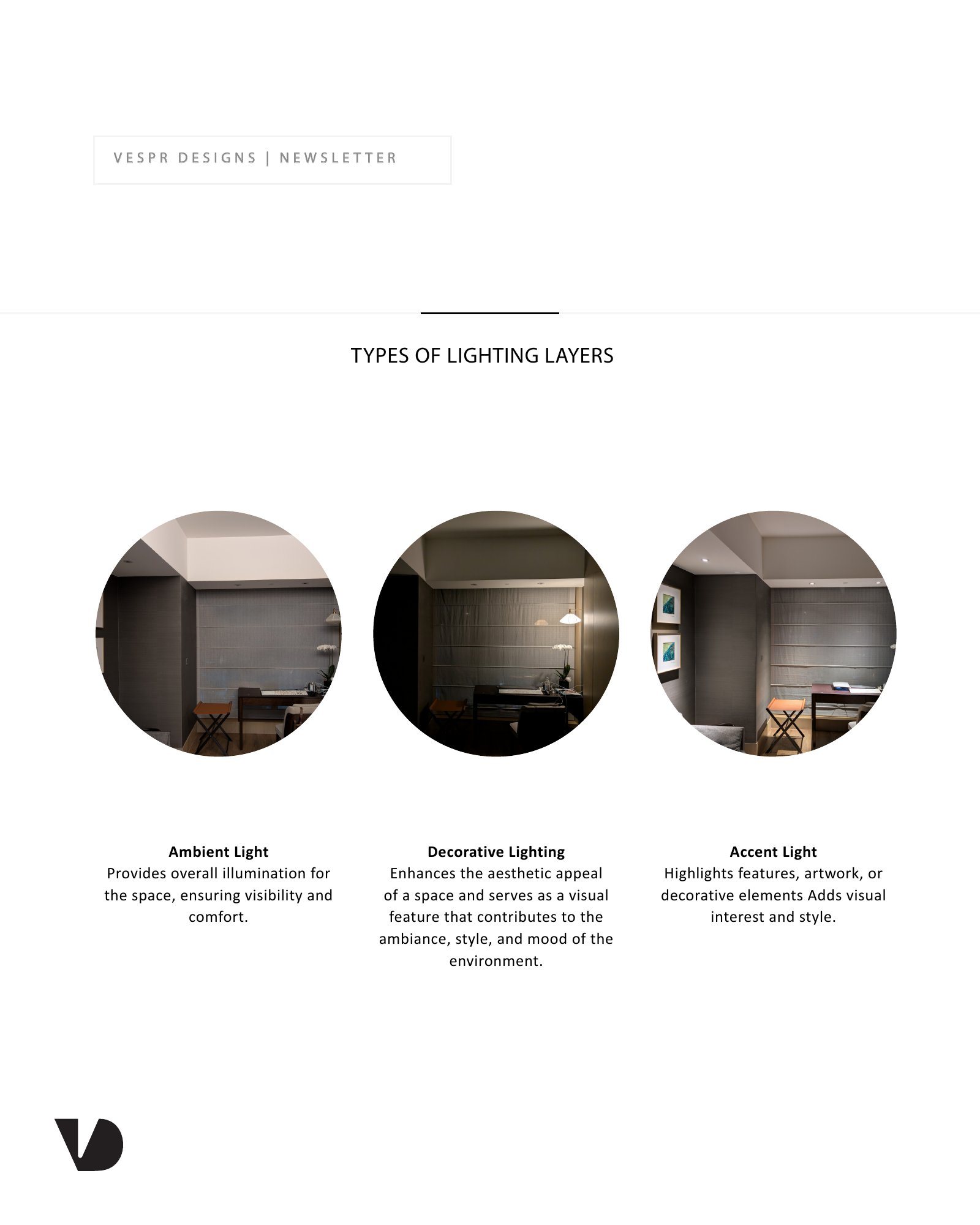
Ambient light: Provides overall illumination for the space, ensuring visibility and comfort.
Decorative lighting: Enhances the aesthetic appeal of a space and serves as a visual feature that contributes to the ambiance, style, and mood of the environment.
Accent light: Highlights features, artwork, or decorative elements. Adds visual interest and style.
Key Considerations When Designing Layers of Light
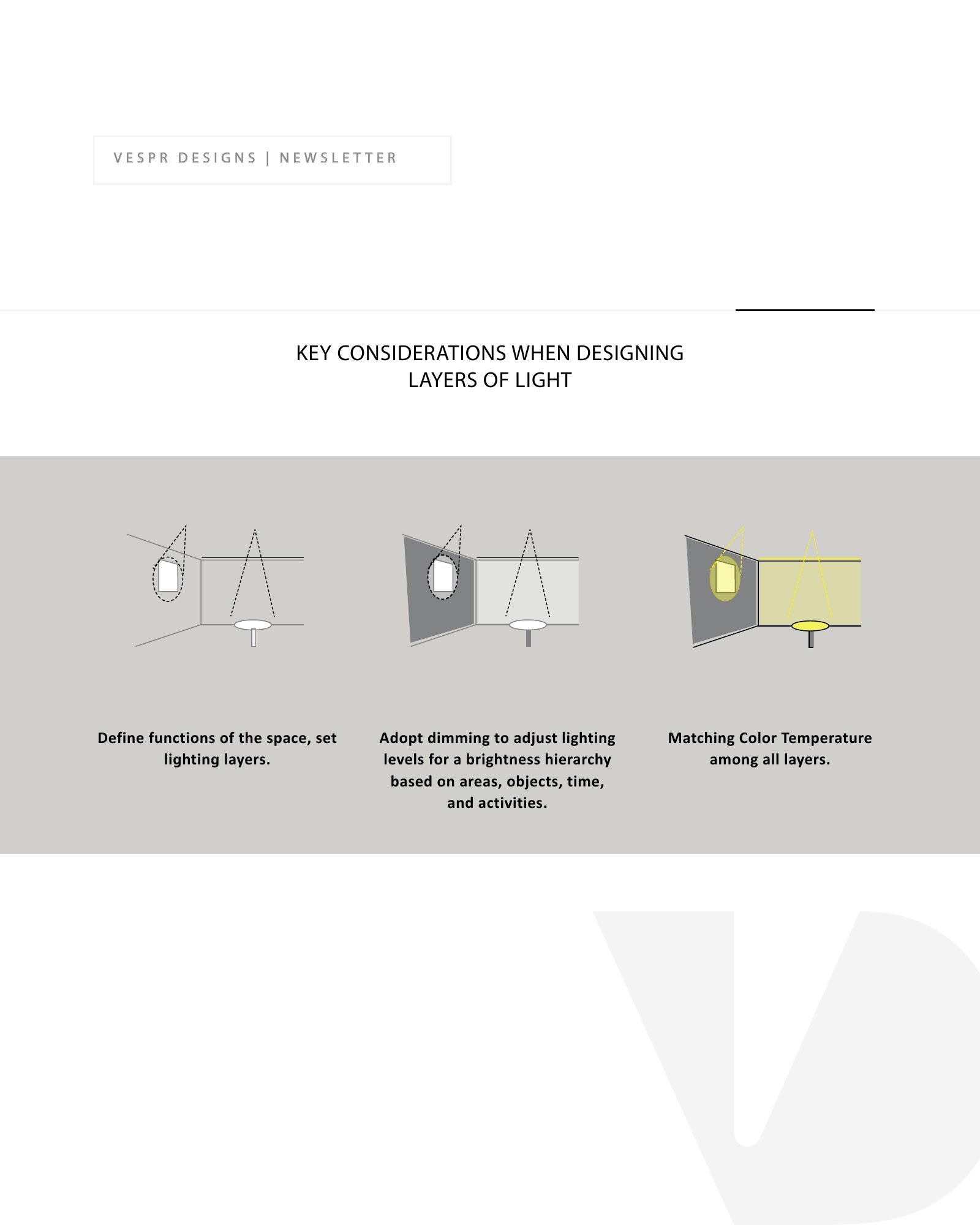
Define the functions of the space and set lighting layers.
Adopt dimming to adjust lighting levels for a brightness hierarchy based on areas, objects, time, and activities.
Match color temperature among all layers.
See the original newsletter (4 pages)