Residential Versus Commercial Lighting: The Differences
The distinct contrast between intimate residential lighting and formal commercial lighting stems not from accident, but from fundamental differences in design intent: specifically, the deliberate use of color temperature, scale, and contrast to prioritize either emotional comfort or functional productivity. In this issue, we will explore some of the differences between residential and commercial lighting, including color temperature, scale, contrast, and lighting control.
Color Temperature
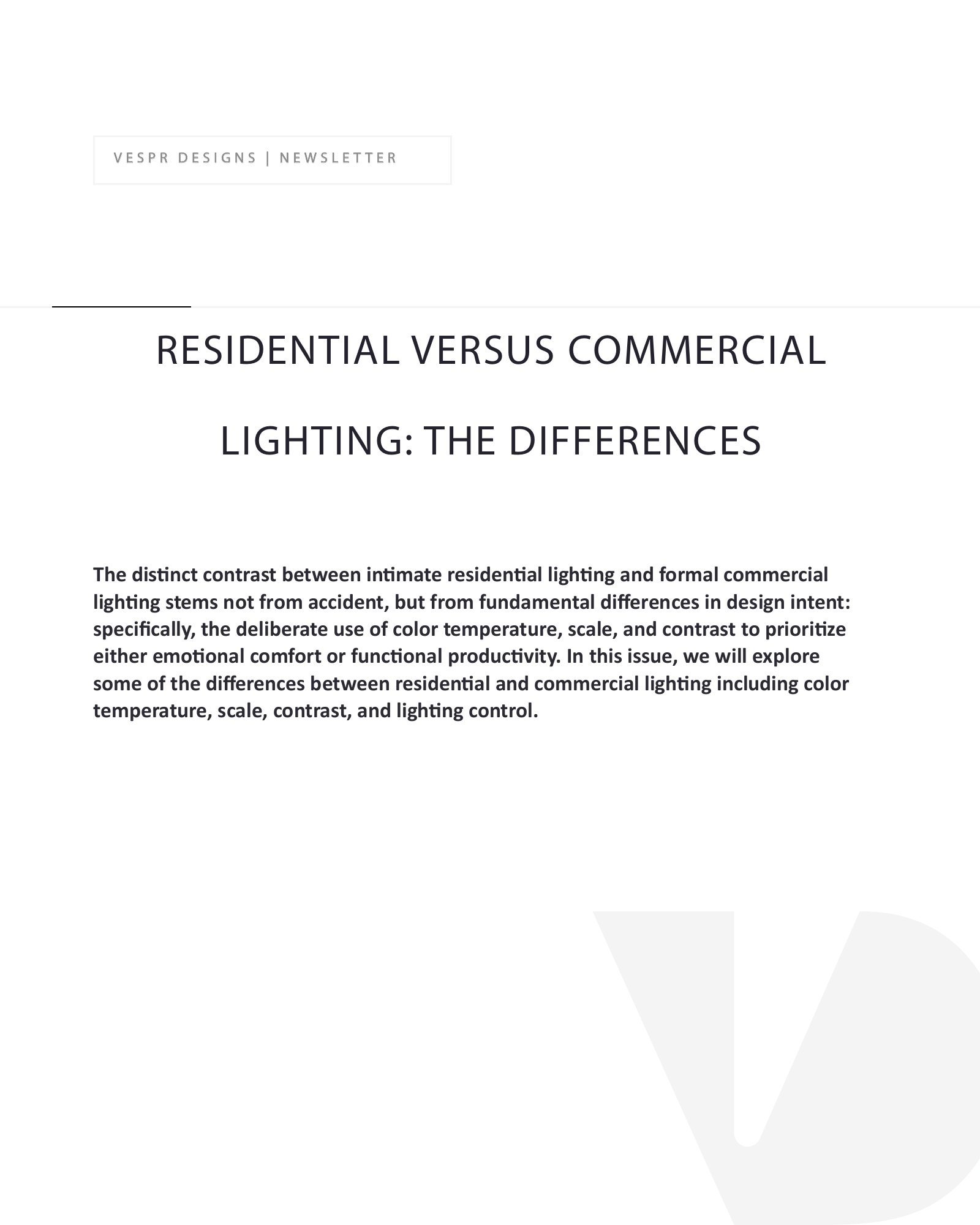
Color temperature plays a key role in setting the stage for comfortable and cozy residential settings. Warm colors, such as 2700 Kelvin or 3000 Kelvin and dim-to-warm, are the most common choices, creating an inviting ambiance. For instance, in a living room where the user wants to feel intimate and relaxed, a warm glow from hidden and indirect sources effectively achieves this mood. Furthermore, finishes and materials are significantly influenced by the color of light; the appropriate temperature can either enhance the finish or detract from it. Using a warm color temperature with warm finishes enriches the space and brings out its character, thereby conveying the overall message of personal, comfortable rooms that users can relate to.
In contrast, color temperatures in commercial spaces are typically cooler, ranging from 3000 Kelvin to 4000 Kelvin. In an office environment, where it is important for the space to feel bright and evenly illuminated, cooler light typically emanates from overhead fixtures. This neutral to cooler temperature creates an overall feeling of brightness and aids in making the lighting feel uniform, stimulating alertness and productivity. Consequently, the cooler color temperature enhances any cooler finishes, potentially bringing out branding or identity that may be present, which ultimately reinforces the purity and functional intent of the commercial space.
Scale
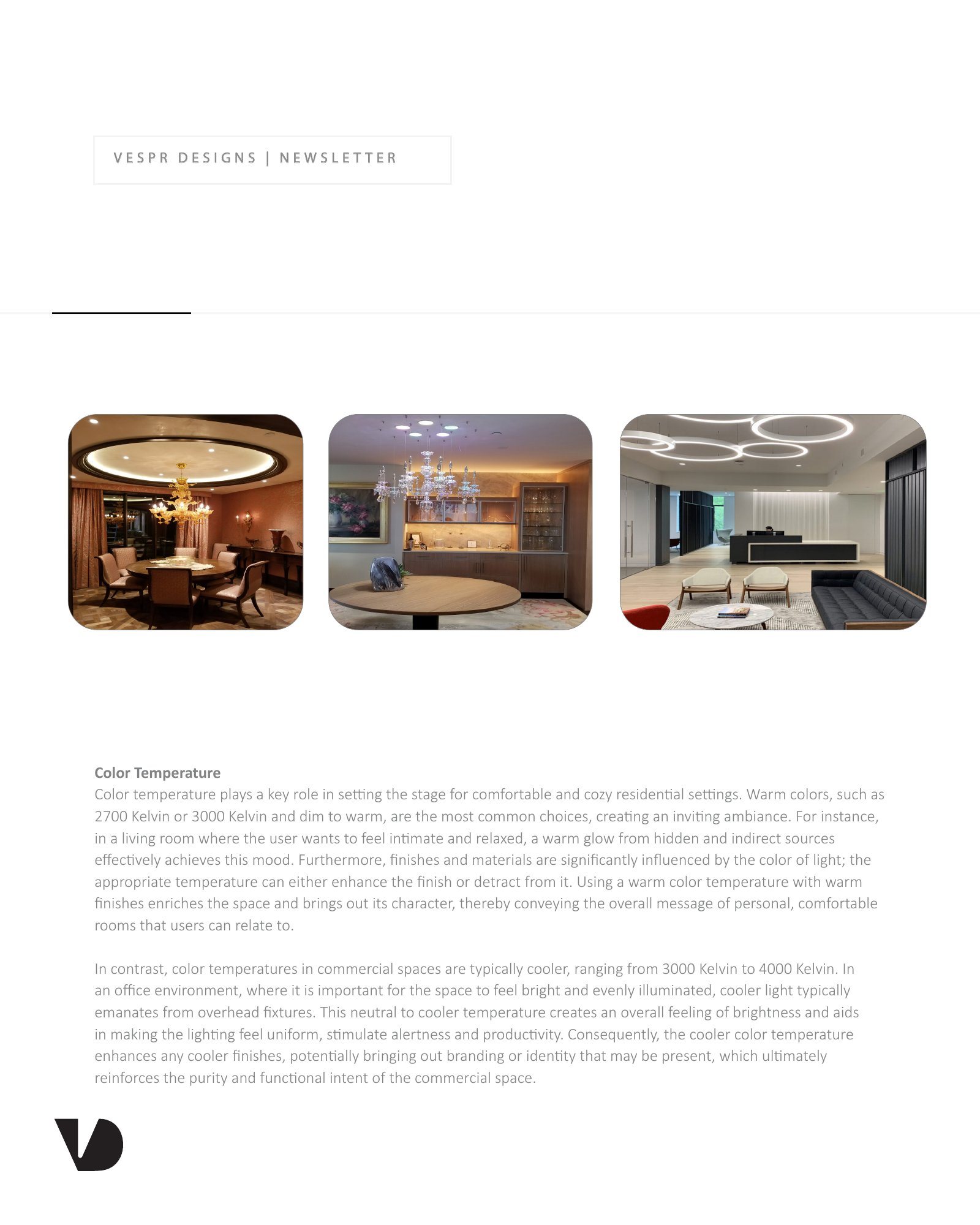
For general illumination, choosing small-scale, recessed fixtures allows them to “disappear” into the ceiling plane. This minimalist approach ensures the focus remains on the room’s architectural elements and overall design.
Equally important is the scale of decorative fixtures, which should relate harmoniously to the architecture. The ceiling height, area, furniture, and dimensions dictate the appropriate size: an oversized fixture in a room with a low ceiling feels overwhelming, whereas a grander, more prominent fixture can serve as a stunning focal point in a space with a tall ceiling. Finally, low-level lighting helps bring a space down to a more human, relatable scale. For example, under-cabinet or under-vanity lighting enhances the ambiance, provides functional task lighting, and can serve as a gentle night light, contributing to a sense of intimacy and comfort. In residential settings, decorative lighting typically favors smaller-scale fixtures to create a cozy, intimate atmosphere for relaxation and comfort.
In commercial settings, decorative light fixtures in bigger-scale spaces can be larger and used as a bold design element. However, when poorly scaled, large fixtures can overwhelm the human environment and make spaces feel less intimate. Similarly, out-of-scale architectural fixtures can cause the environment to feel clunky and disrupt the design’s flow. It is therefore vital to keep scale in mind during the design process so the result enhances, rather than detracts from, the built environment.
Contrast
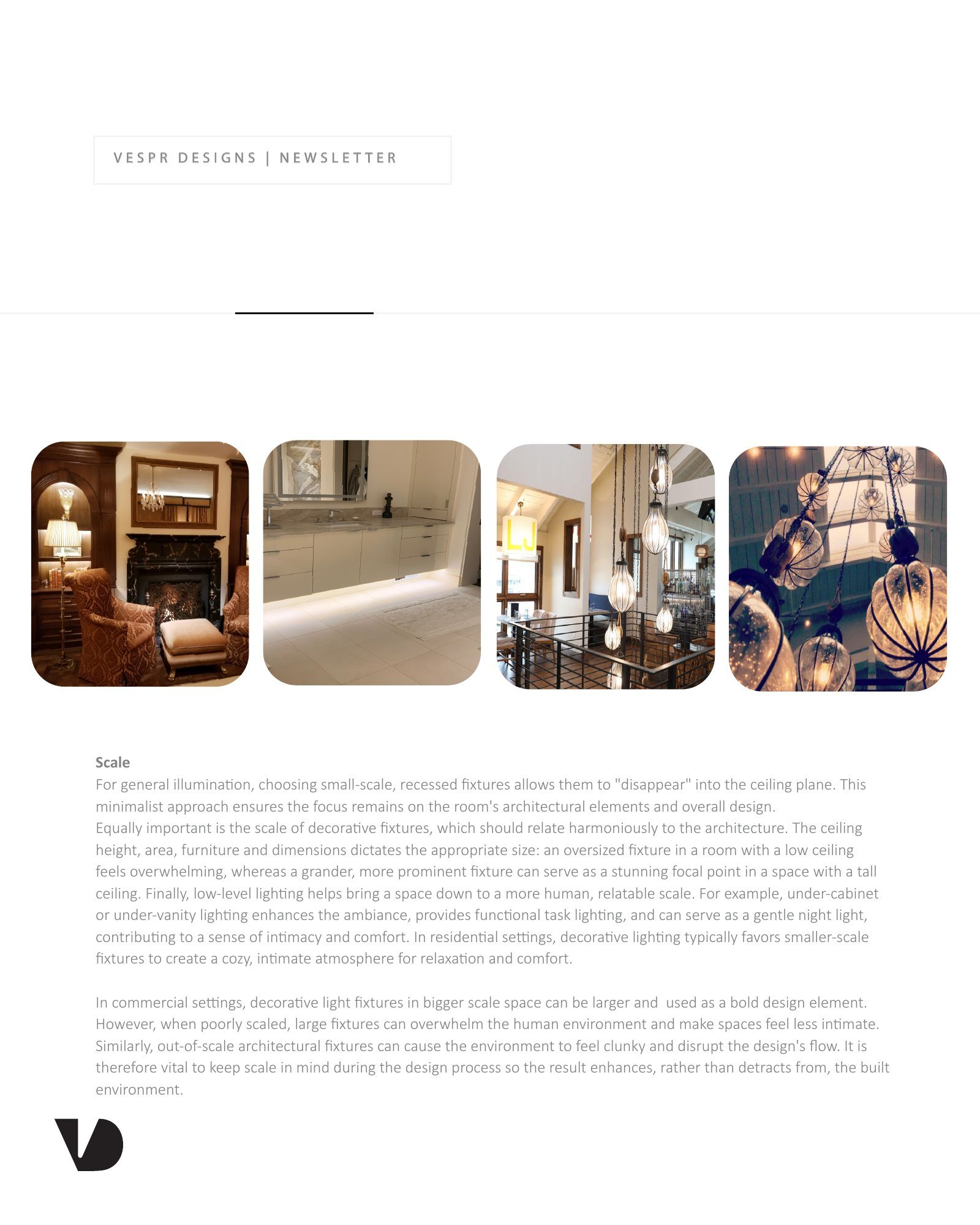
The balance of light and dark in residential settings is crucial to creating a dynamic and visually engaging space. Contrast helps make the space more dramatic and draws visual attention to artwork and furniture. The interplay of dark and light can forge a more intimate atmosphere, such as in a living room where the user is looking to rest and relax. A mood-lit environment is inherently more pleasing for resting than an evenly and brightly lit one.
In commercial settings, high contrast is less common in general work areas, but often strategically utilized in hospitality or retail settings. Less contrast is typically seen in spaces like atriums and offices, which are evenly lit for functionality. The use of contrast in these commercial settings is often intended as a “wow” factor or to create drama. In a hotel setting, for instance, contrast can be used to draw the user in and compel them to stay longer. In retail settings, contrast serves to sell the product by using light and dark to highlight the specific merchandise the user should focus on.
Lighting Control
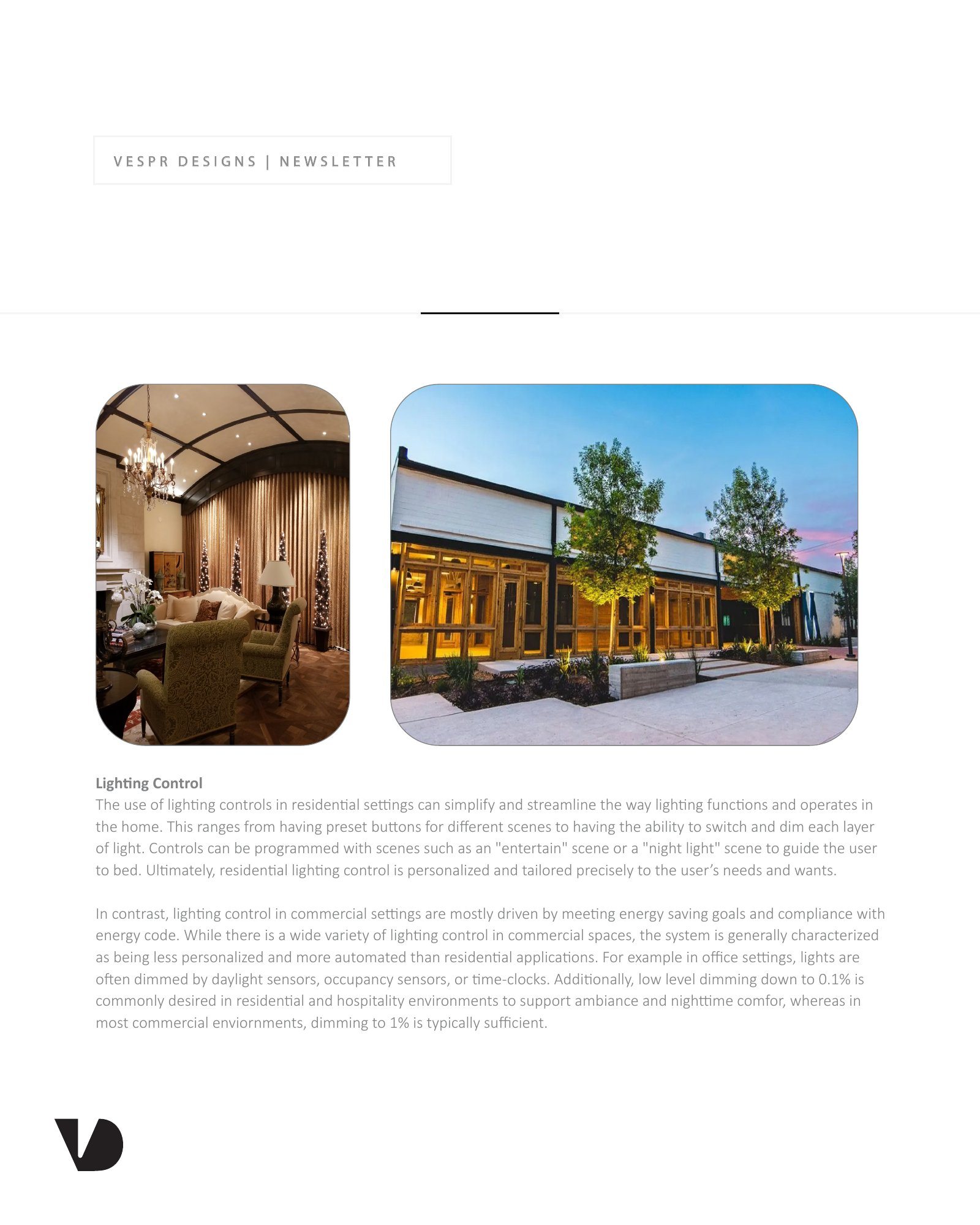
The use of lighting controls in residential settings can simplify and streamline the way lighting functions and operates in the home. This ranges from having preset buttons for different scenes to having the ability to switch and dim each layer of light. Controls can be programmed with scenes such as an “entertain” scene or a “night light” scene to guide the user to bed. Ultimately, residential lighting control is personalized and tailored precisely to the user’s needs and wants.
In contrast, lighting control in commercial settings is mostly driven by meeting energy-saving goals and compliance with energy code. While there is a wide variety of lighting control in commercial spaces, the system is generally characterized as being less personalized and more automated than residential applications. For example, in office settings, lights are often dimmed by daylight sensors, occupancy sensors, or time clocks. Additionally, low-level dimming down to 0.1% is commonly desired in residential and hospitality environments to support ambiance and nighttime comfort, whereas in most commercial environments, dimming to 1% is typically sufficient.
To sum it up, the distinction between intimate residential lighting and formal commercial lighting arises from fundamental design differences. Residential design prioritizes emotional comfort through warm color temperatures, intimate scale, greater contrast, and personalized controls, while commercial design focuses on functional productivity with neutral to cooler temperatures, often larger scale, more uniform light, and more automated controls. These are all ideas we can be thinking about as we ring in the New Year.
See the original newsletter (6 pages)