Overlooked Considerations in Outdoor Lighting Design
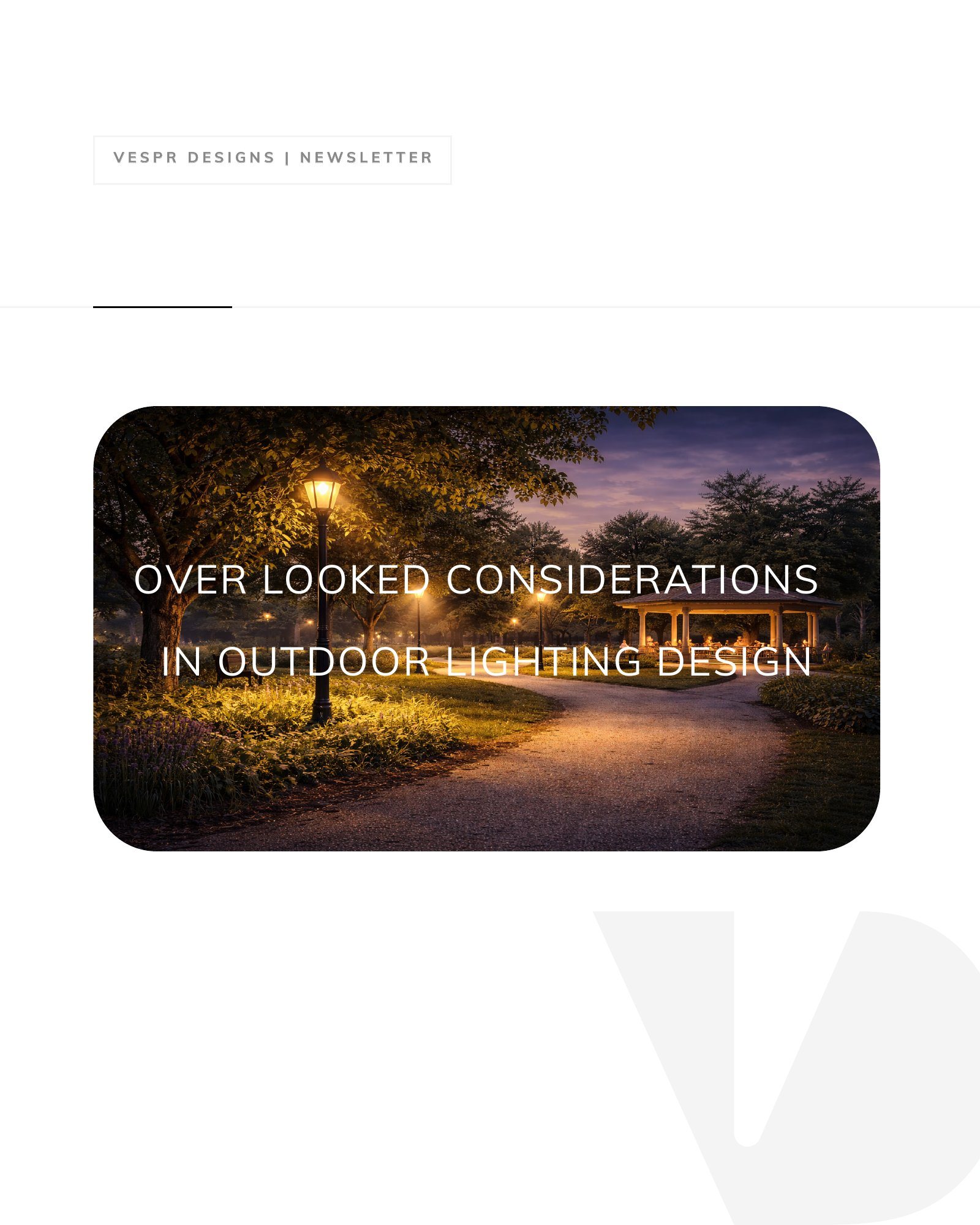
Outdoor lighting design is often evaluated through metrics like illuminance levels, fixture counts, and code compliance, but many of the factors that truly shape how a space feels and functions are less visible during the design process. From how luminaires appear in the daytime, to how light interacts with growing landscapes, to whether people can recognize faces comfortably at night, these subtle considerations are frequently overlooked until late in the project, or even after installation. By looking beyond standard calculations and focusing on human experience, maintenance realities, and long-term site evolution, designers can create outdoor environments that are not only functional, but enduring and thoughtfully integrated into their context.
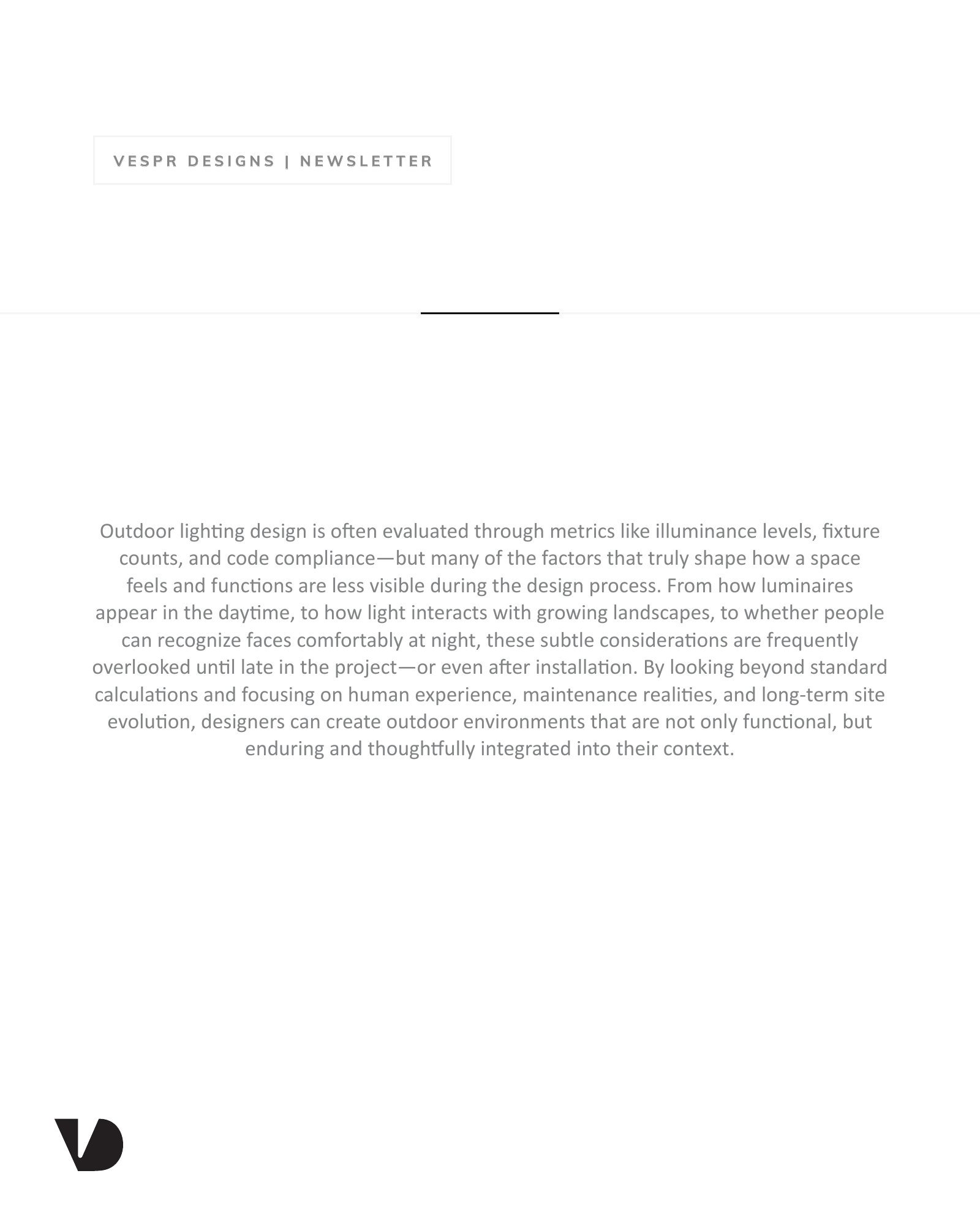
Vertical Illumination vs. Horizontal Light
Designers often focus on footcandles on the ground, but what people actually perceive is vertical brightness, faces, trees, facades, and walls. Prioritizing vertical illumination enhances visual clarity, spatial awareness, and a sense of comfort, helping outdoor environments feel safer and more inviting.
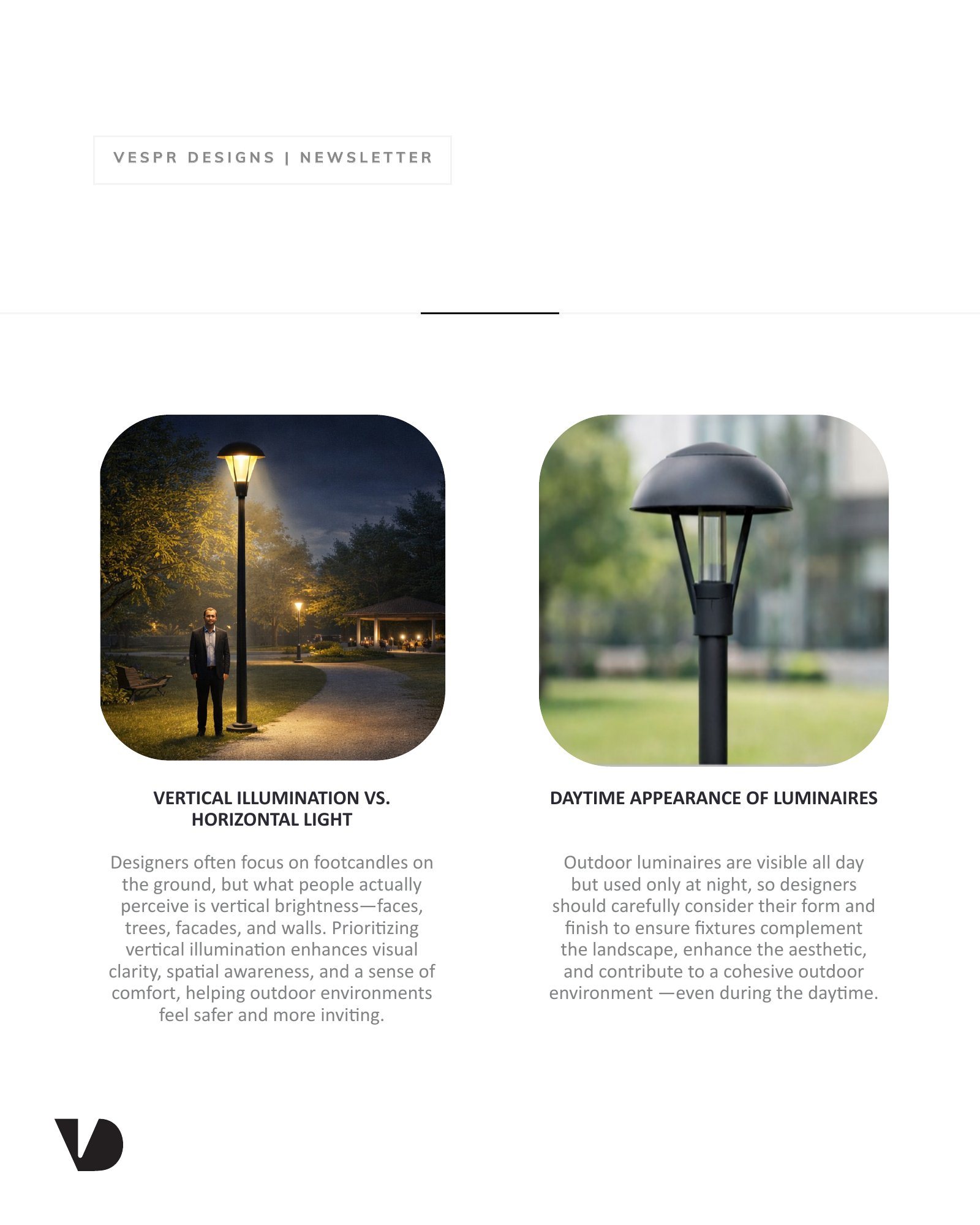
Daytime Appearance of Luminaires
Outdoor luminaires are visible all day but used only at night, so designers should carefully consider their form and finish to ensure fixtures complement the landscape, enhance the aesthetic, and contribute to a cohesive outdoor environment, even during the daytime.
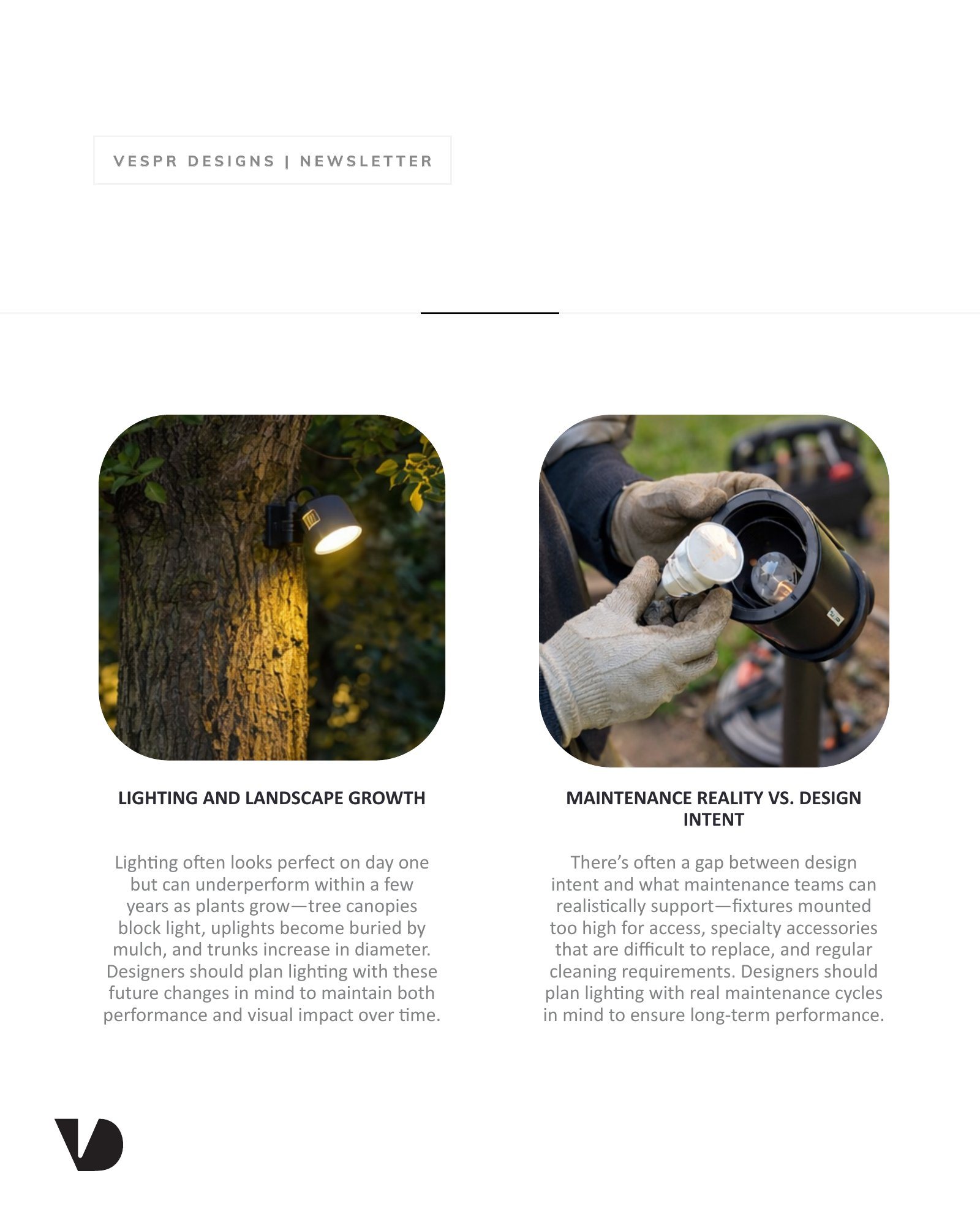
Lighting and Landscape Growth
Lighting often looks perfect on day one but can underperform within a few years as plants grow, tree canopies block light, uplights become buried by mulch, and trunks increase in diameter. Designers should plan lighting with these future changes in mind to maintain both performance and visual impact over time.
Maintenance Reality vs. Design Intent
There’s often a gap between design intent and what maintenance teams can realistically support, fixtures mounted too high for access, specialty accessories that are difficult to replace, and regular cleaning requirements. Designers should plan lighting with real maintenance cycles in mind to ensure long-term performance.
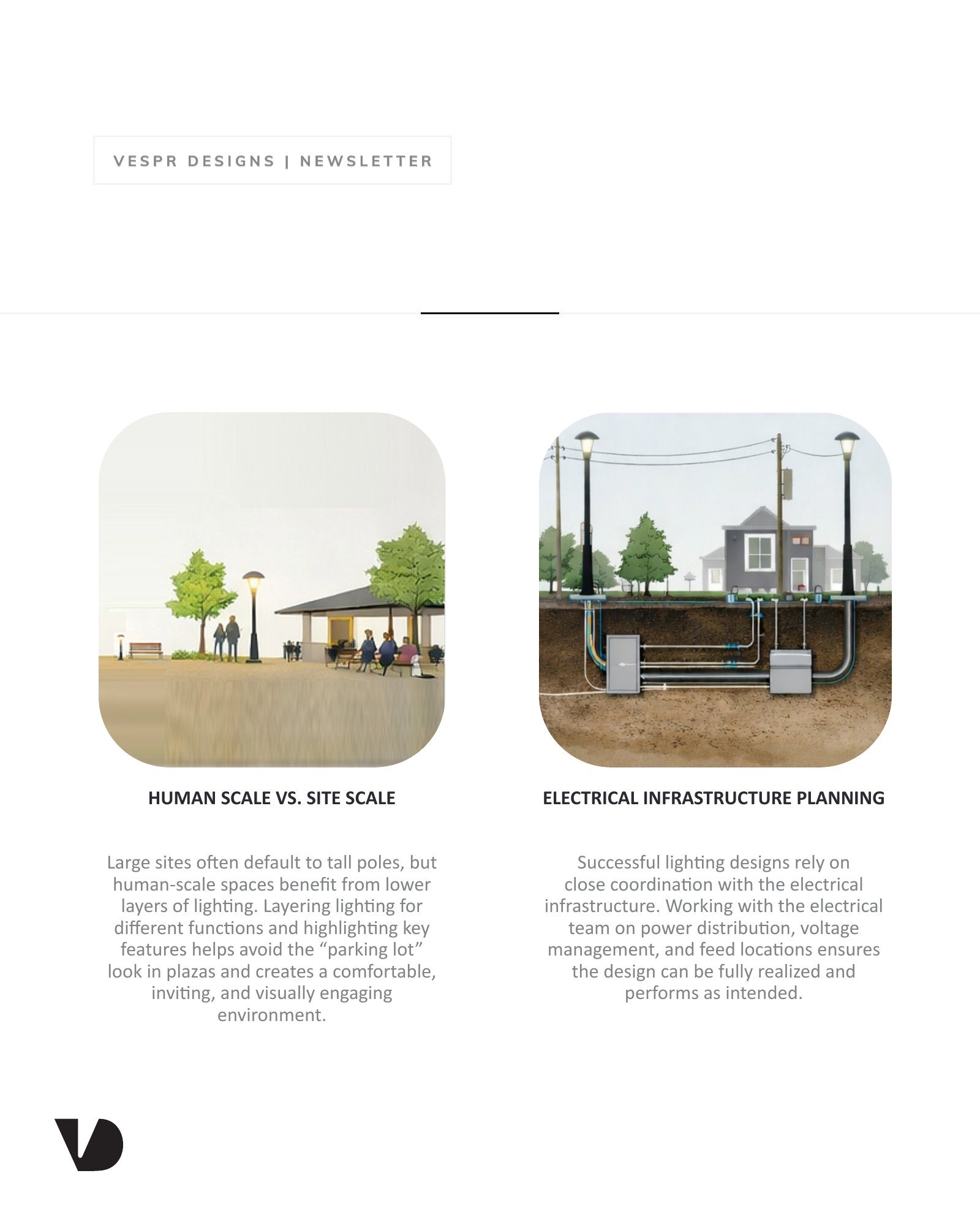
Human Scale vs. Site Scale
Large sites often default to tall poles, but human-scale spaces benefit from lower layers of lighting. Layering lighting for different functions and highlighting key features helps avoid the “parking lot” look in plazas and creates a comfortable, inviting, and visually engaging environment.
Electrical Infrastructure Planning
Successful lighting designs rely on close coordination with the electrical infrastructure. Working with the electrical team on power distribution, voltage management, and feed locations ensures the design can be fully realized and performs as intended.
By keeping these often-overlooked considerations in mind, designers can bridge the gap between concept and long-term performance. Thoughtful attention to form, functionality, maintenance, and coordination ensures outdoor lighting enhances both the experience and longevity of a space.
See the original newsletter (6 pages)