Maximizing the Lifespan of LED Lighting: Understanding LEDs and LED Drivers
The advent of LED technology has transformed the lighting industry, offering significant advantages over traditional light sources such as incandescent bulbs and HID lamps. LEDs are renowned for their exceptional energy efficiency, durability, and longevity, making them a popular choice in both residential and commercial applications. Understanding the factors that influence the lifespan of both LEDs and their drivers is essential for optimizing their performance and achieving the best value from LED lighting systems.
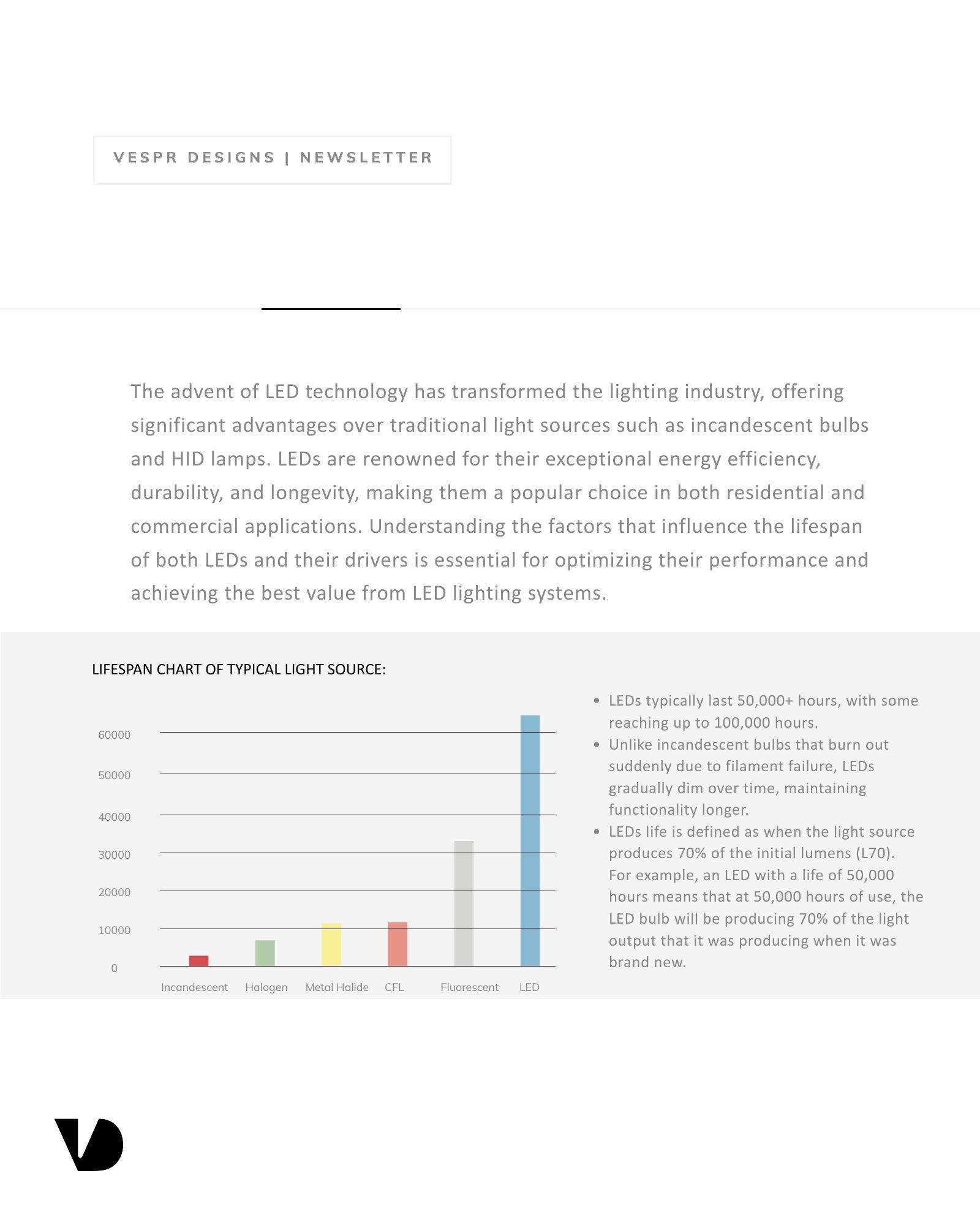
Lifespan of Typical Light Sources
LEDs typically last 50,000+ hours, with some reaching up to 100,000 hours.
Unlike incandescent bulbs that burn out suddenly due to filament failure, LEDs gradually dim over time, maintaining functionality longer.
LED life is defined as the point when the light source produces 70% of its initial lumens (L70). For example, an LED with a life of 50,000 hours means that at 50,000 hours of use, the LED will be producing 70% of the light output that it was producing when it was brand new.
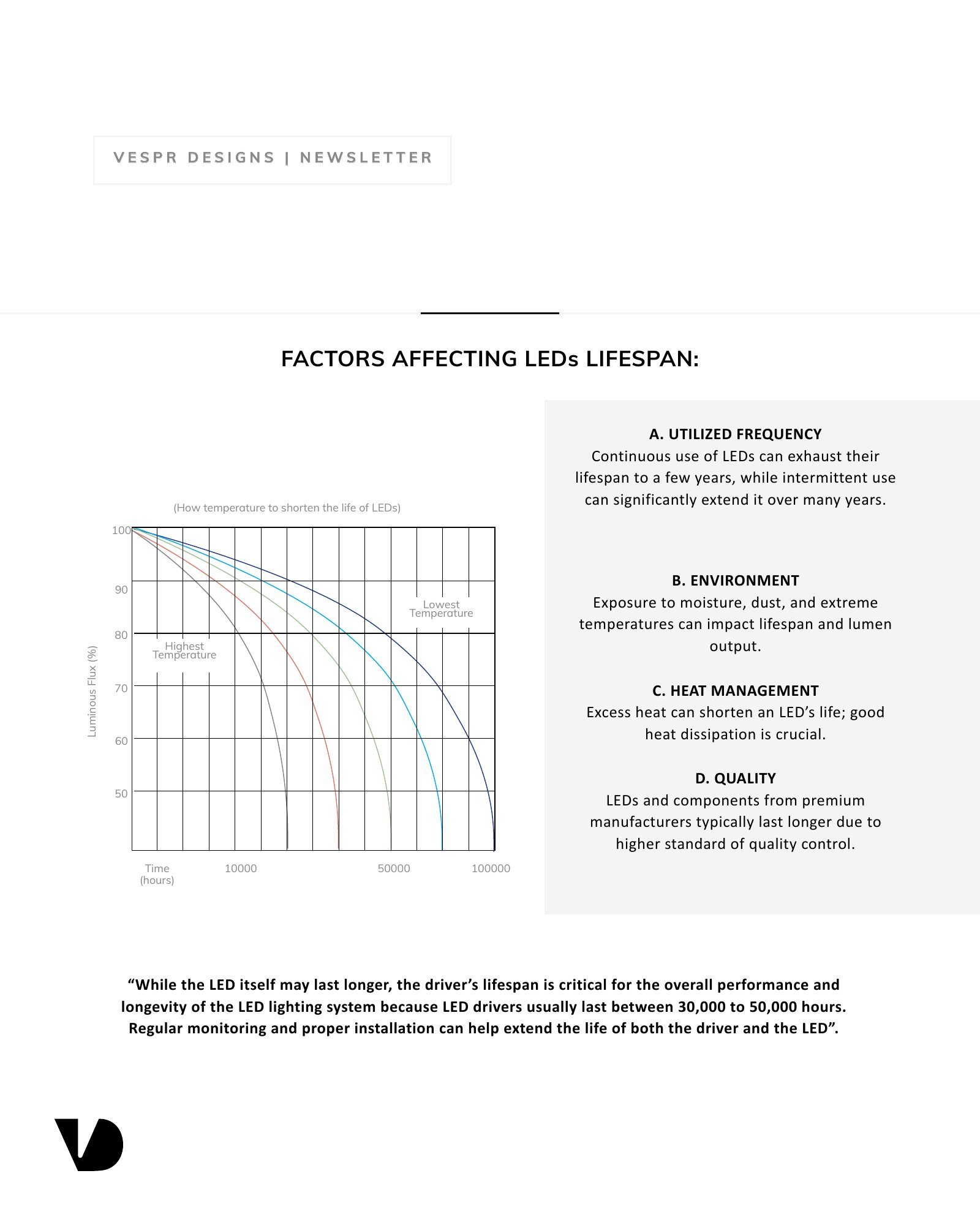
Factors Affecting LED Lifespan
Utilized frequency: Continuous use of LEDs can exhaust their lifespan in a few years, while intermittent use can significantly extend it over many years.
Environment: Exposure to moisture, dust, and extreme temperatures can impact lifespan and lumen output.
Heat management: Excess heat can shorten an LED’s life; good heat dissipation is crucial.
Quality: LEDs and components from premium manufacturers typically last longer due to a higher standard of quality control.
While the LED itself may last longer, the driver’s lifespan is critical for the overall performance and longevity of the LED lighting system, because LED drivers usually last between 30,000 and 50,000 hours. Regular monitoring and proper installation can help extend the life of both the driver and the LED.
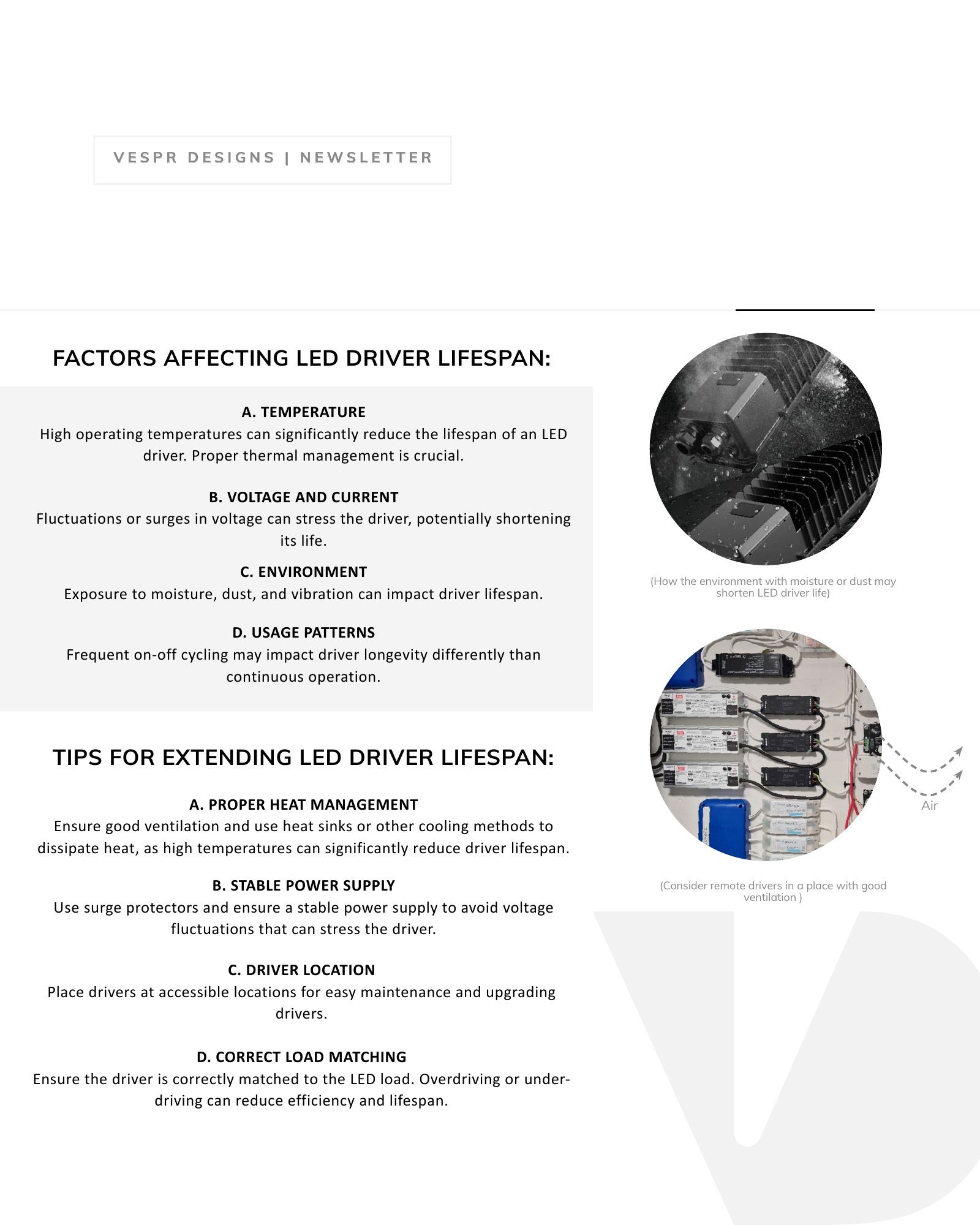
Factors Affecting LED Driver Lifespan
Temperature: High operating temperatures can significantly reduce the lifespan of an LED driver. Proper thermal management is crucial.
Voltage and current: Fluctuations or surges in voltage can stress the driver, potentially shortening its life.
Environment: Exposure to moisture, dust, and vibration can impact driver lifespan.
Usage patterns: Frequent on-off cycling may impact driver longevity differently than continuous operation.
Tips for Extending LED Driver Lifespan
Proper heat management: Ensure good ventilation and use heat sinks or other cooling methods to dissipate heat, as high temperatures can significantly reduce driver lifespan. Consider remote drivers in a place with good ventilation.
Stable power supply: Use surge protectors and ensure a stable power supply to avoid voltage fluctuations that can stress the driver.
Driver location: Place drivers in accessible locations for easy maintenance and driver upgrades.
Correct load matching: Ensure the driver is correctly matched to the LED load. Overdriving or underdriving can reduce efficiency and lifespan.
See the original newsletter (4 pages)